This is a truly grand and powerful piece. A large, heavy Baroque-style dining table, built in the early 1900s, likely around the 1930s–1940s. It’s made entirely from solid oak – not just any oak, but oak that has been laid in a bog to develop a patina that mimics the depth and character of 300-year-old timber. The result is an incredible surface texture, rich with age and soul.
The table has always belonged to the same family and has been carefully preserved over the years. The tabletop (3.5cm - 1.38inches) rests freely on the base, but due to its sheer weight, it sits firm and solid – you could literally dance on it.
It’s what one might call a classic vineyard or refectory table – farmhouse in style, with strong English Baroque and 17th/18th-century influences. Sometimes referred to as a Jacobean oak table, this piece has stunning carved elements throughout, from the decorative apron to the thick sculpted legs that resemble elephant feet.
No screws or nails were used in its construction – it’s entirely joined with traditional woodworking techniques. The craftsmanship is on full display.
The table measures 77 cm in height – slightly higher than today’s standard – giving it a commanding presence. We've paired it with lighter oak Henning Kjærnulf chairs, but more modern seating would also contrast beautifully.
The geometry of the design is striking: a solid, rectangular top supported by bold horizontal columns and ornate legs, all connected by a frame rich with fine carvings and intricate detailing. The entire piece is a stunning fusion of rustic strength and refined craftsmanship.
In the spirit of 17th-century English Jacobean oak – this is not just a table, it’s a piece of history.
There are a few areas on the tabletop that were patched during the original construction of the piece – see the photos with the matchbox for reference
Dimensions:
Width: 212 cm
Depth: 80 cm
Height: 77.5 cm
This is a truly grand and powerful piece. A large, heavy Baroque-style dining table, built in the early 1900s, likely around the 1930s–1940s. It’s made entirely from solid oak – not just any oak, but oak that has been laid in a bog to develop a patina that mimics the depth and character of 300-year-old timber. The result is an incredible surface texture, rich with age and soul.
The table has always belonged to the same family and has been carefully preserved over the years. The tabletop (3.5cm - 1.38inches) rests freely on the base, but due to its sheer weight, it sits firm and solid – you could literally dance on it.
It’s what one might call a classic vineyard or refectory table – farmhouse in style, with strong English Baroque and 17th/18th-century influences. Sometimes referred to as a Jacobean oak table, this piece has stunning carved elements throughout, from the decorative apron to the thick sculpted legs that resemble elephant feet.
No screws or nails were used in its construction – it’s entirely joined with traditional woodworking techniques. The craftsmanship is on full display.
The table measures 77 cm in height – slightly higher than today’s standard – giving it a commanding presence. We've paired it with lighter oak Henning Kjærnulf chairs, but more modern seating would also contrast beautifully.
The geometry of the design is striking: a solid, rectangular top supported by bold horizontal columns and ornate legs, all connected by a frame rich with fine carvings and intricate detailing. The entire piece is a stunning fusion of rustic strength and refined craftsmanship.
In the spirit of 17th-century English Jacobean oak – this is not just a table, it’s a piece of history.
There are a few areas on the tabletop that were patched during the original construction of the piece – see the photos with the matchbox for reference
Dimensions:
Width: 212 cm
Depth: 80 cm
Height: 77.5 cm
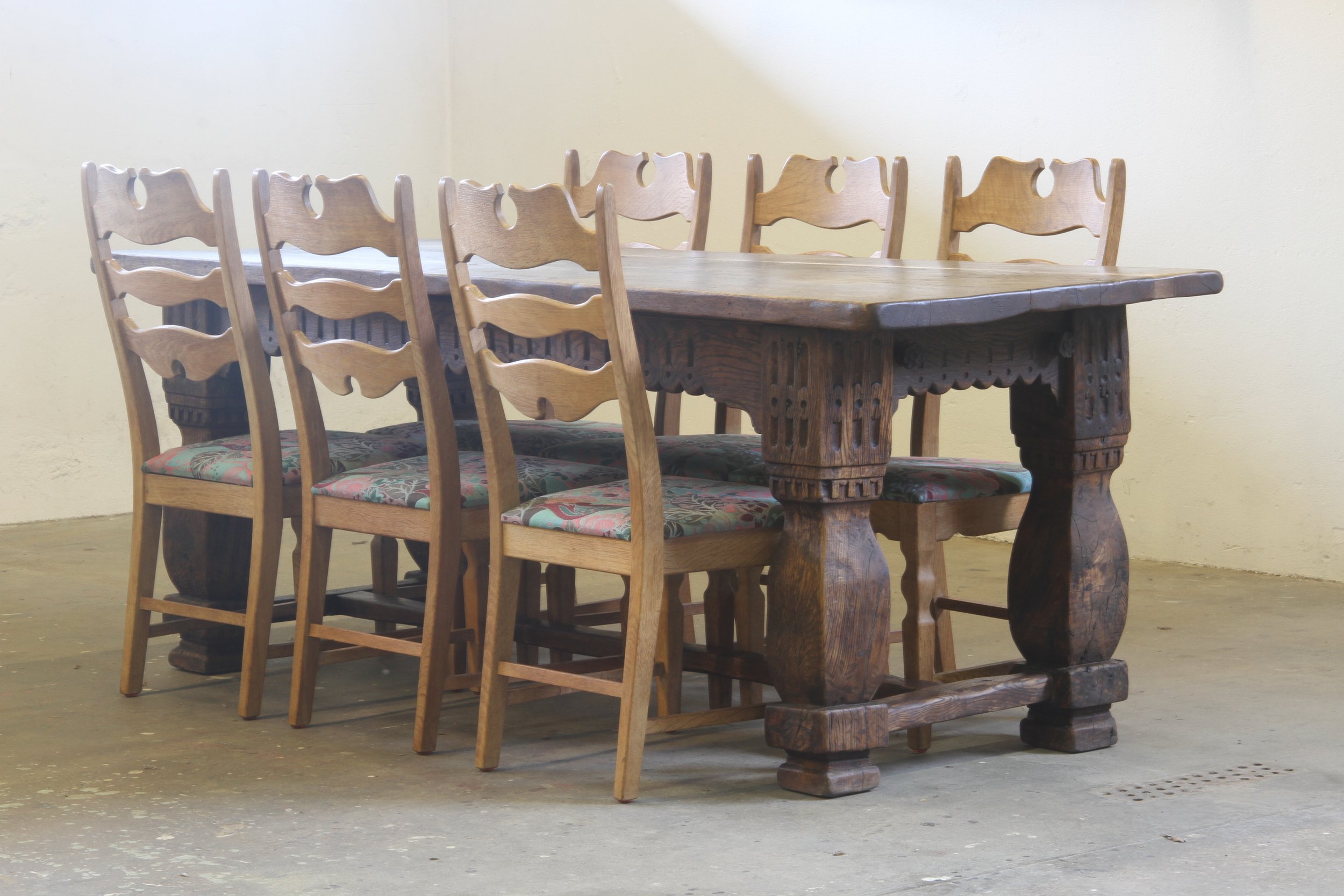 Image 1 of 15
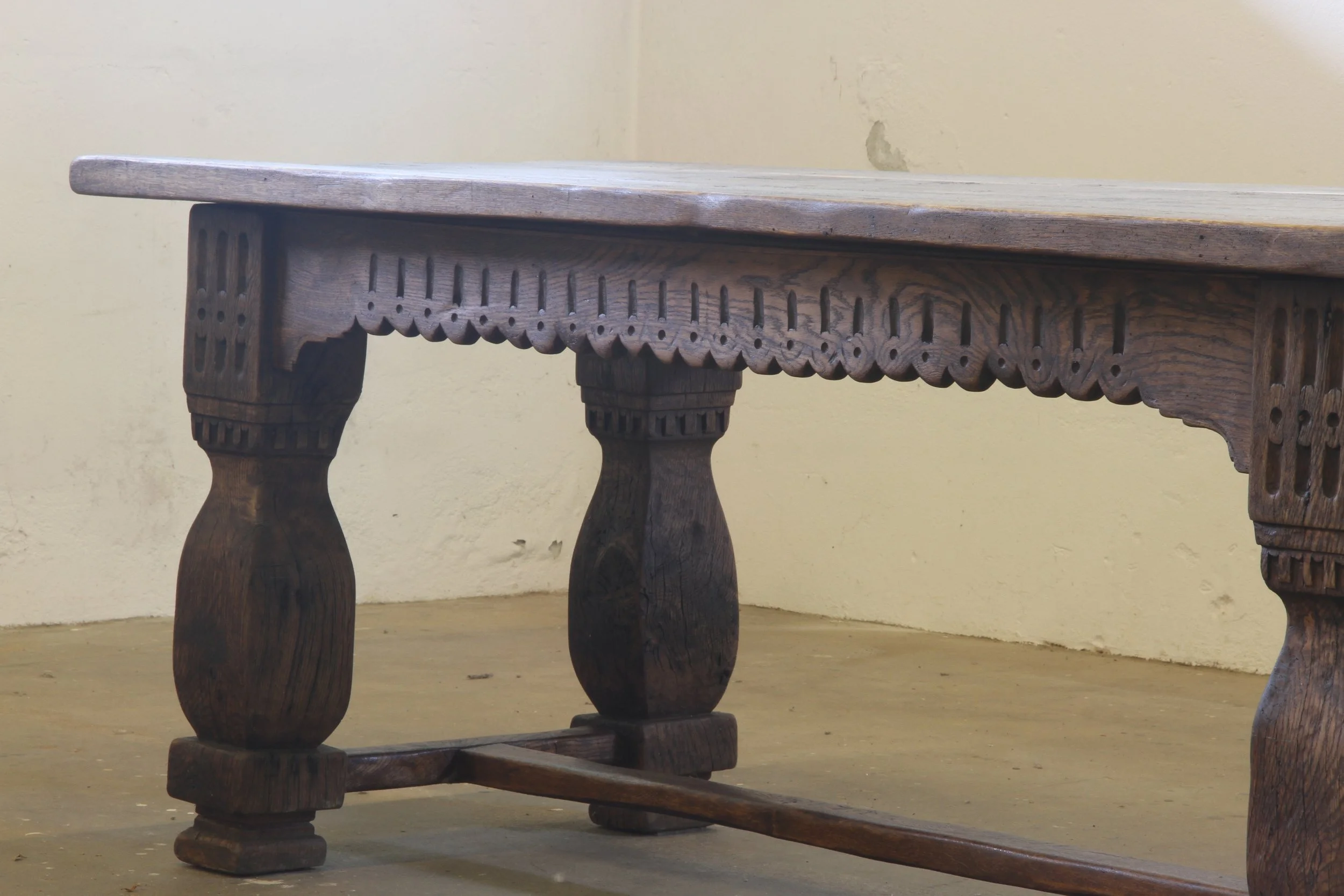 Image 2 of 15
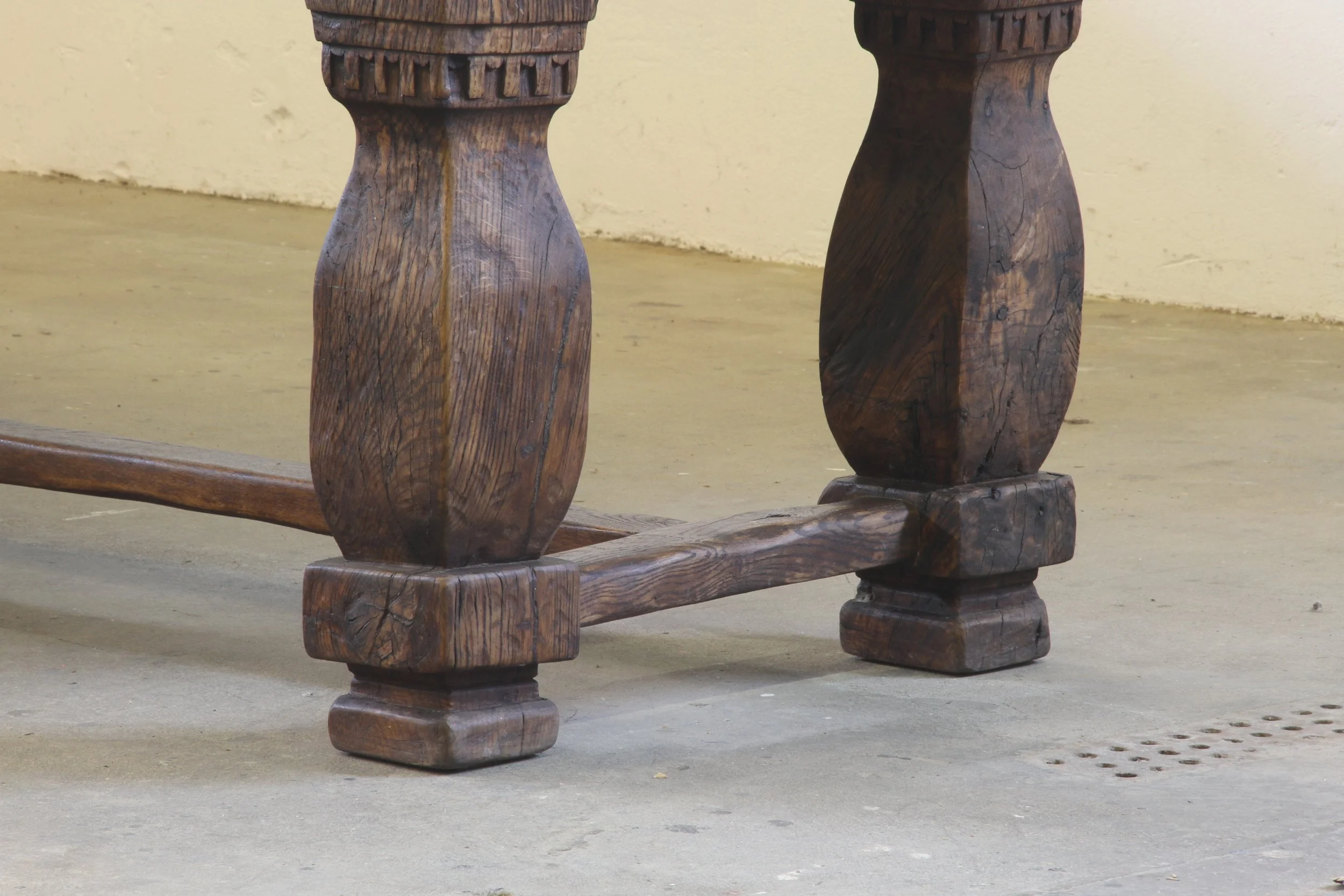 Image 3 of 15
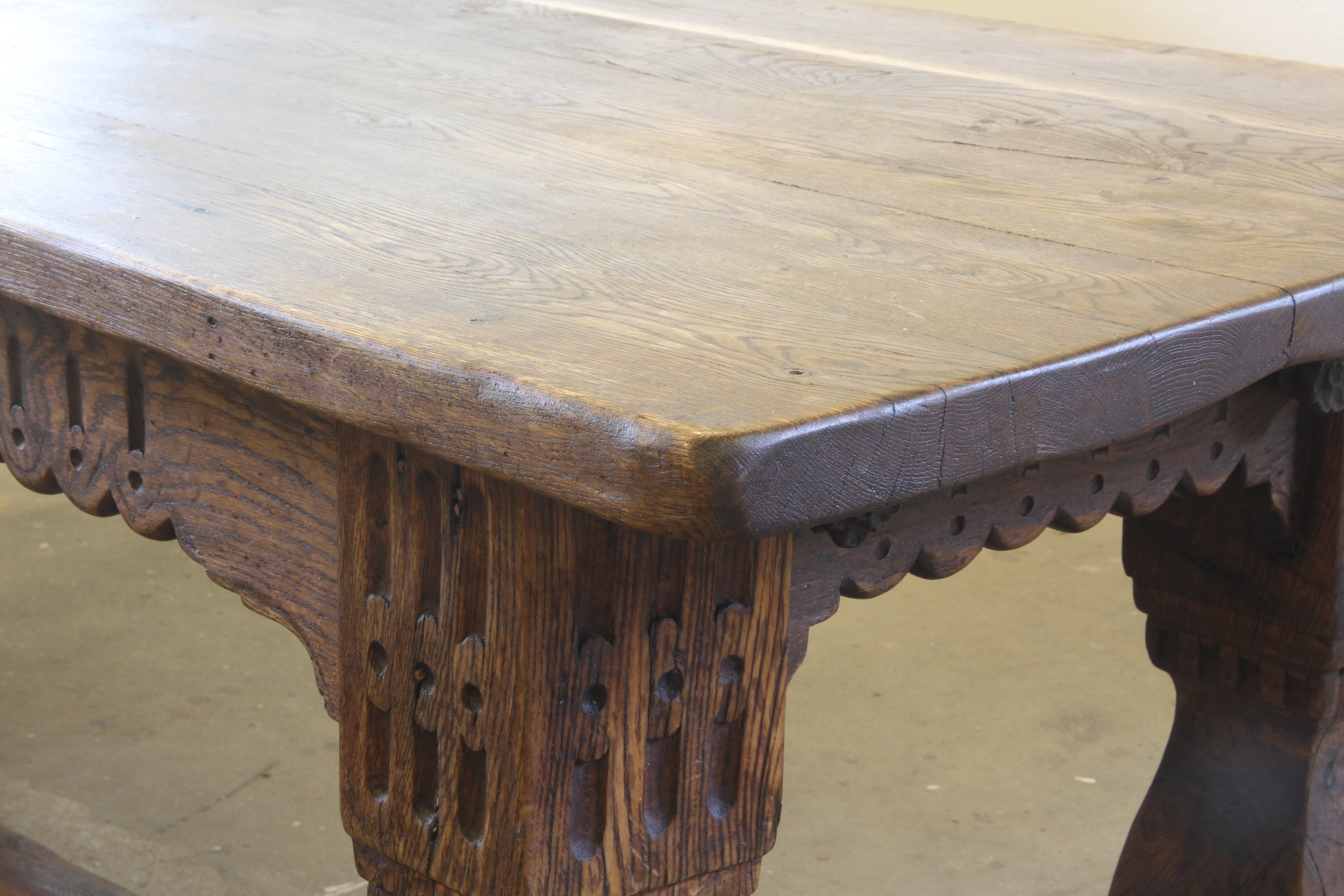 Image 4 of 15
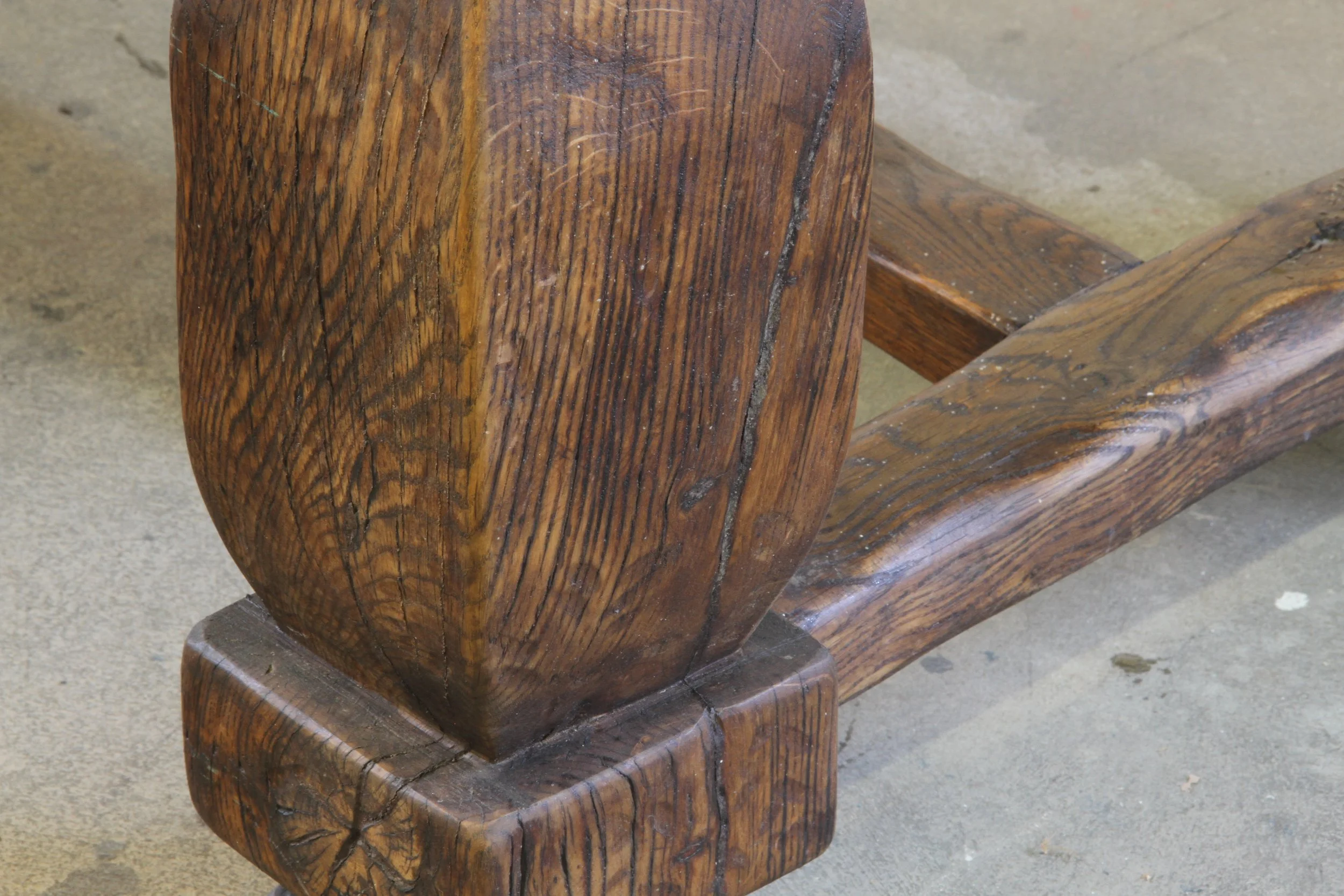 Image 5 of 15
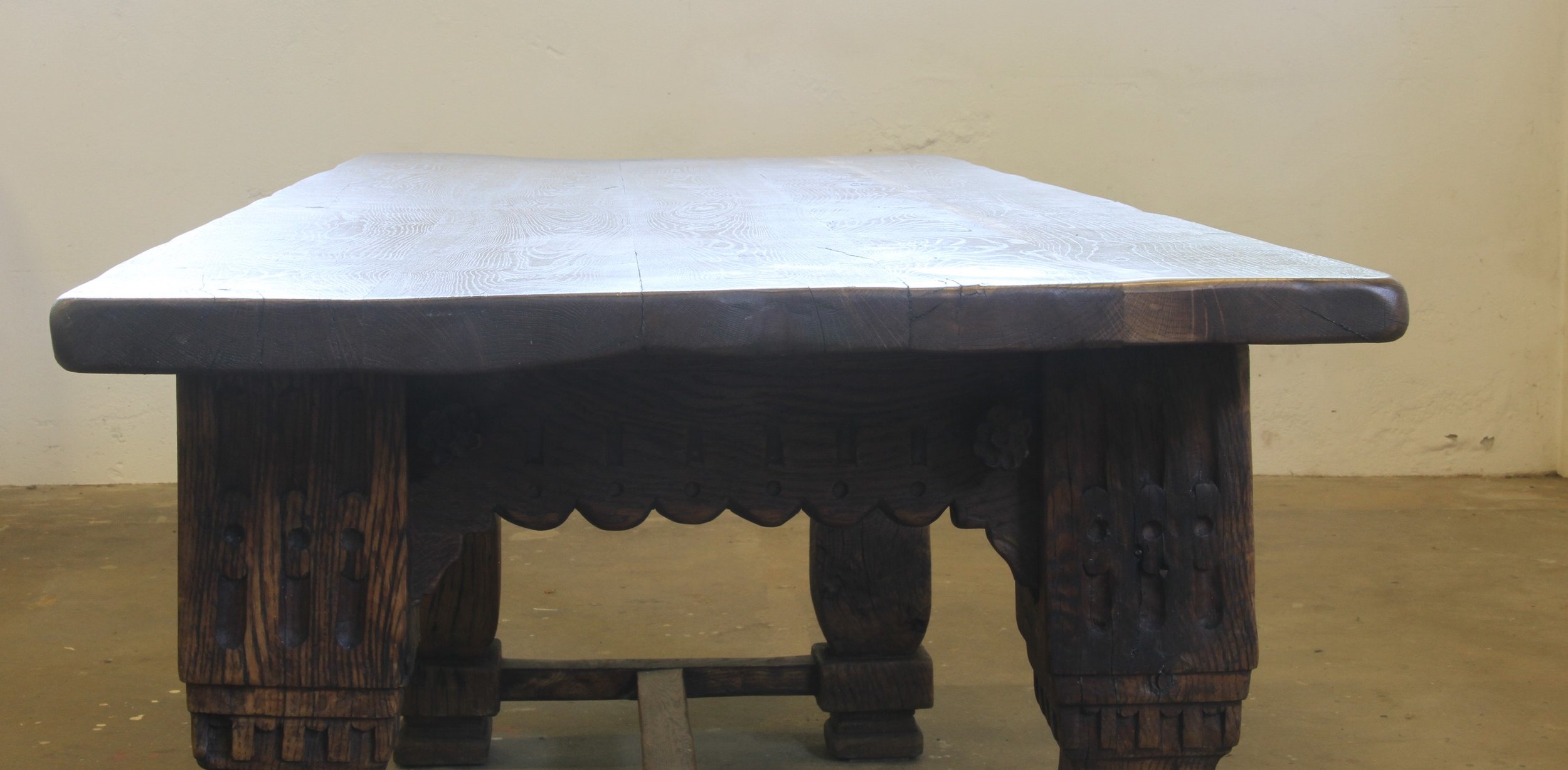 Image 6 of 15
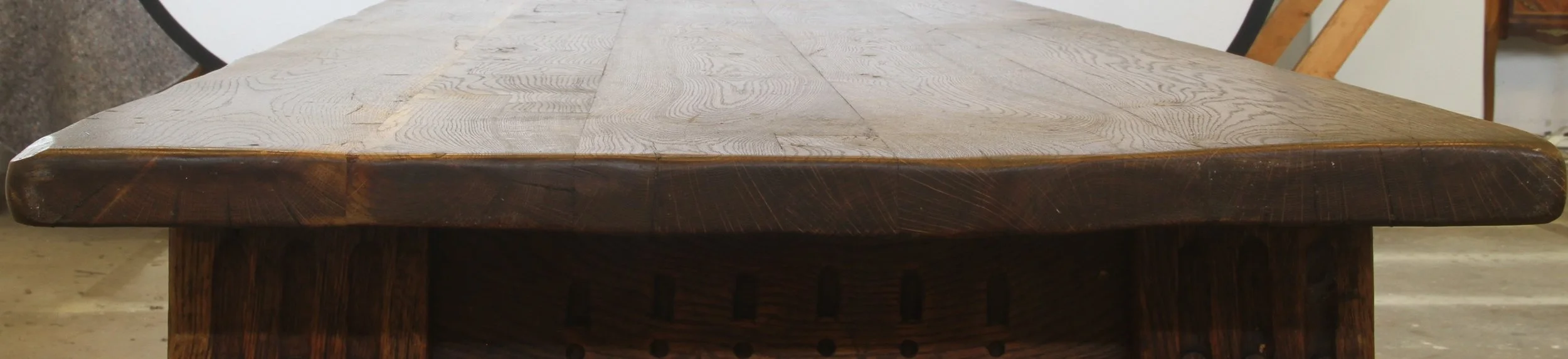 Image 7 of 15
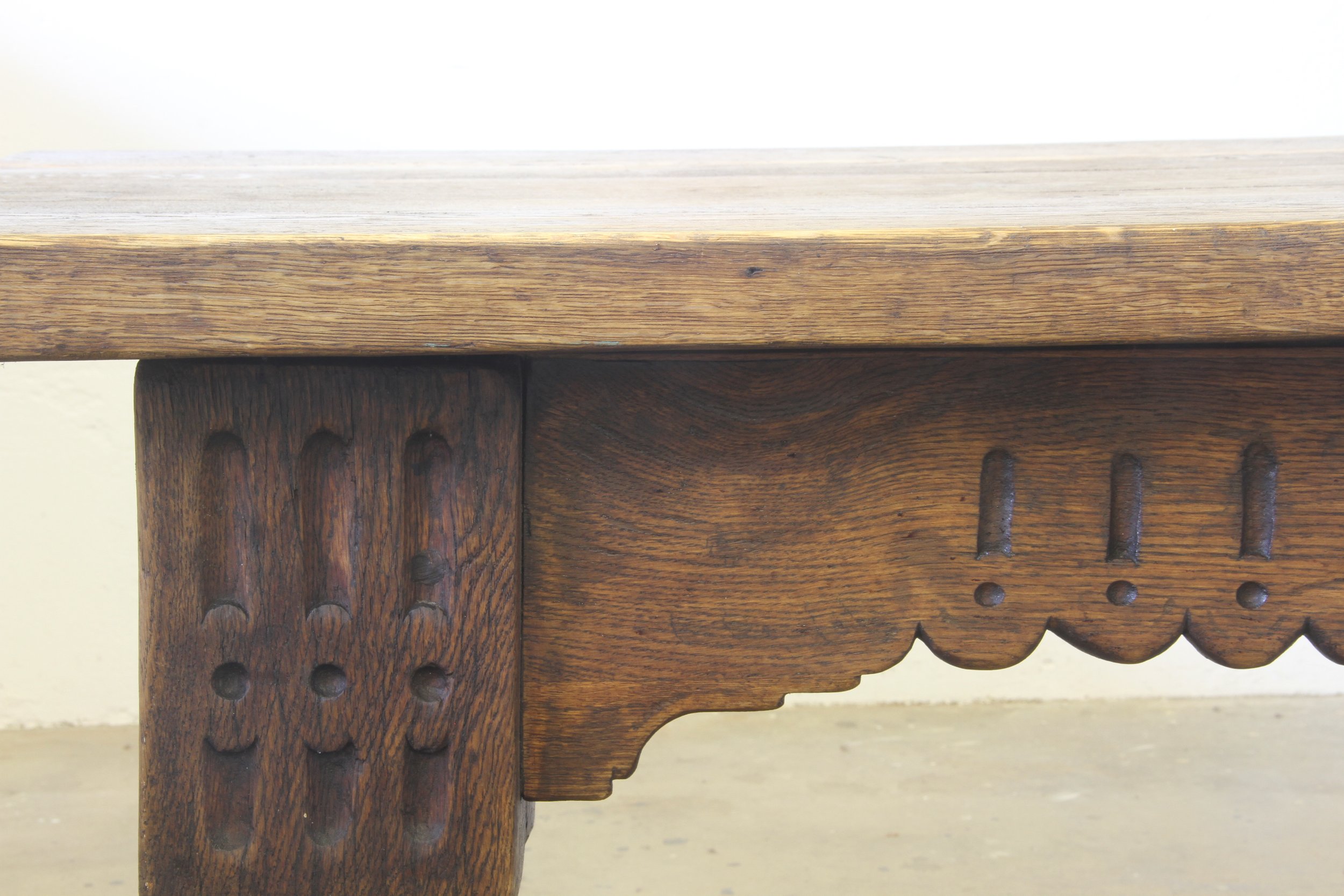 Image 8 of 15
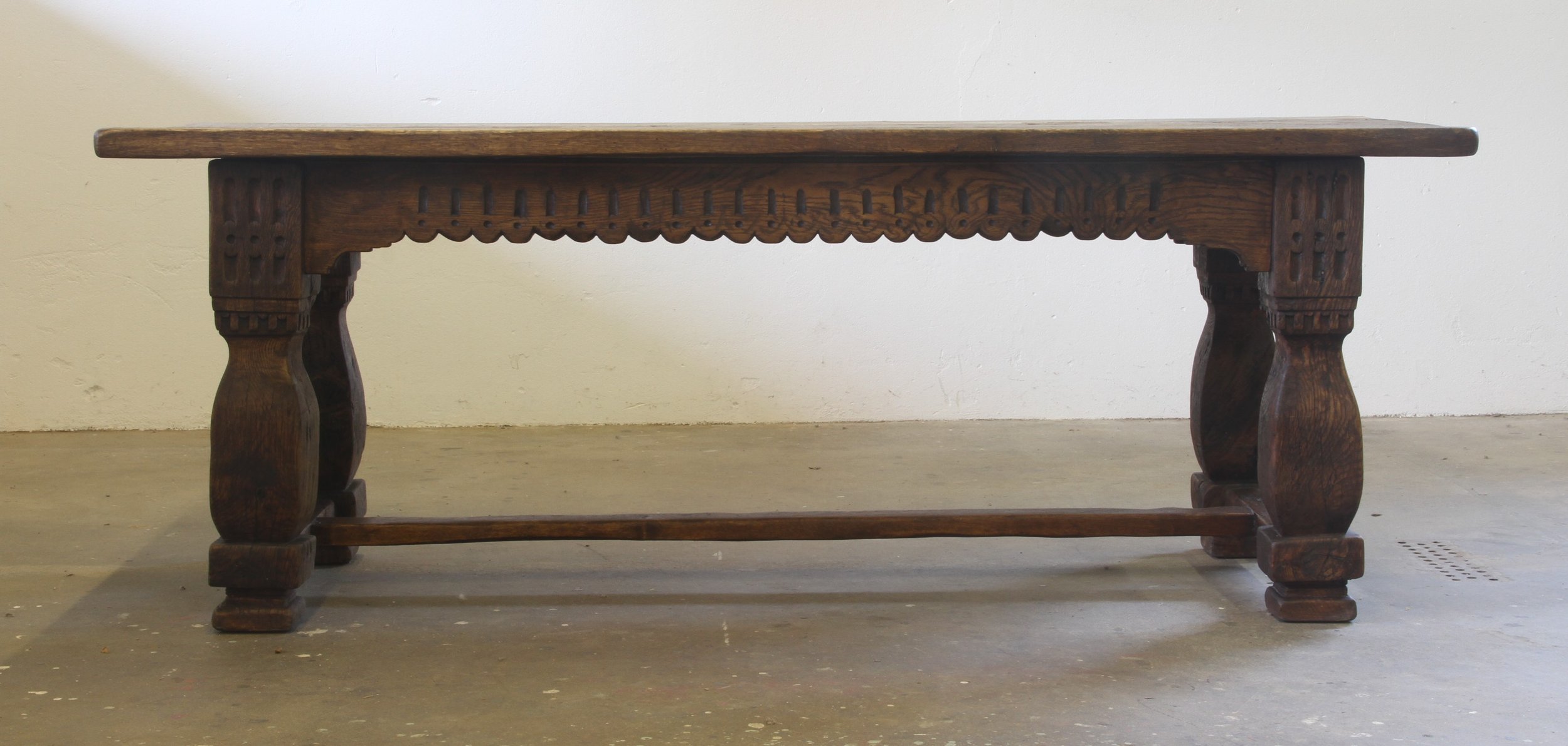 Image 9 of 15
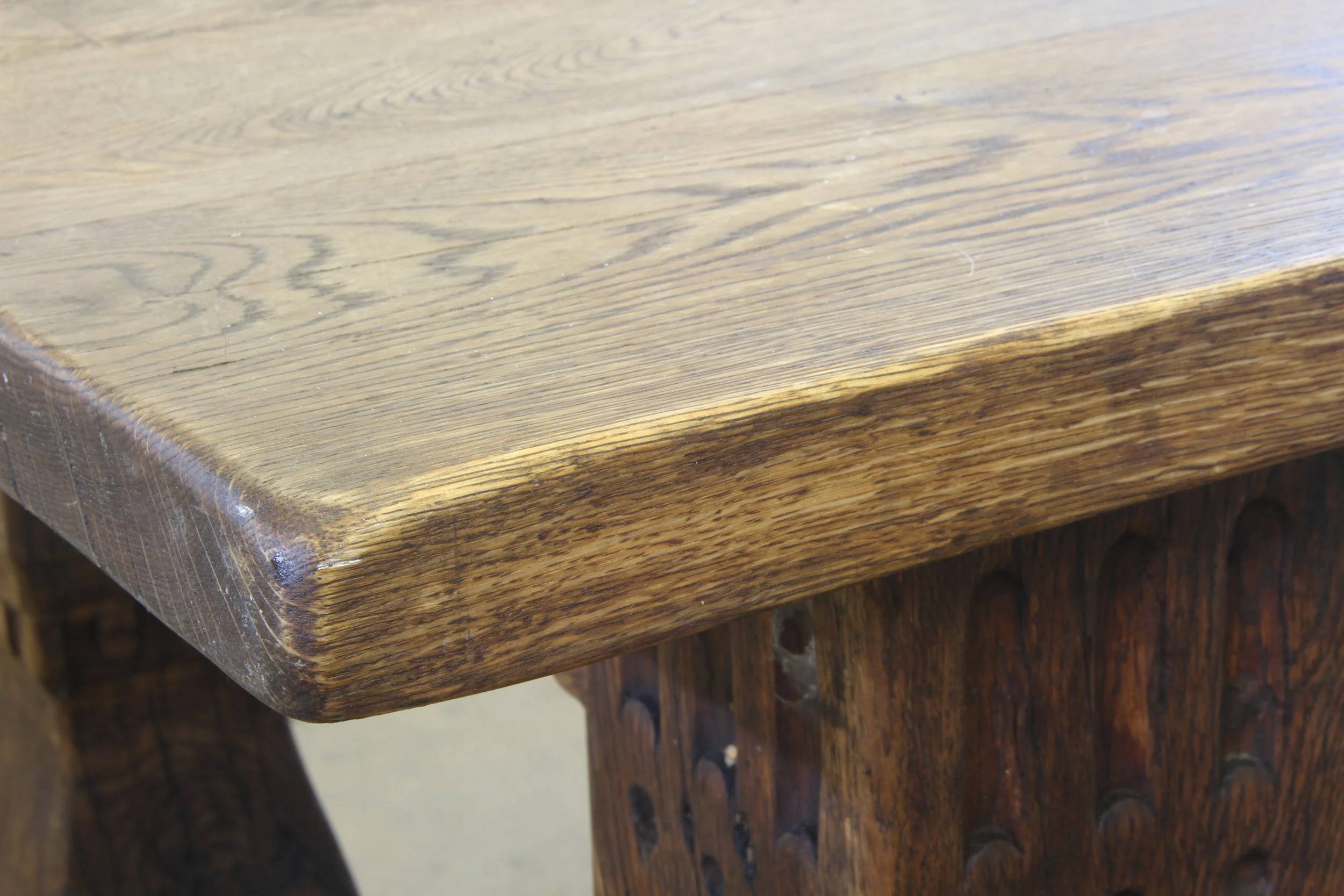 Image 10 of 15
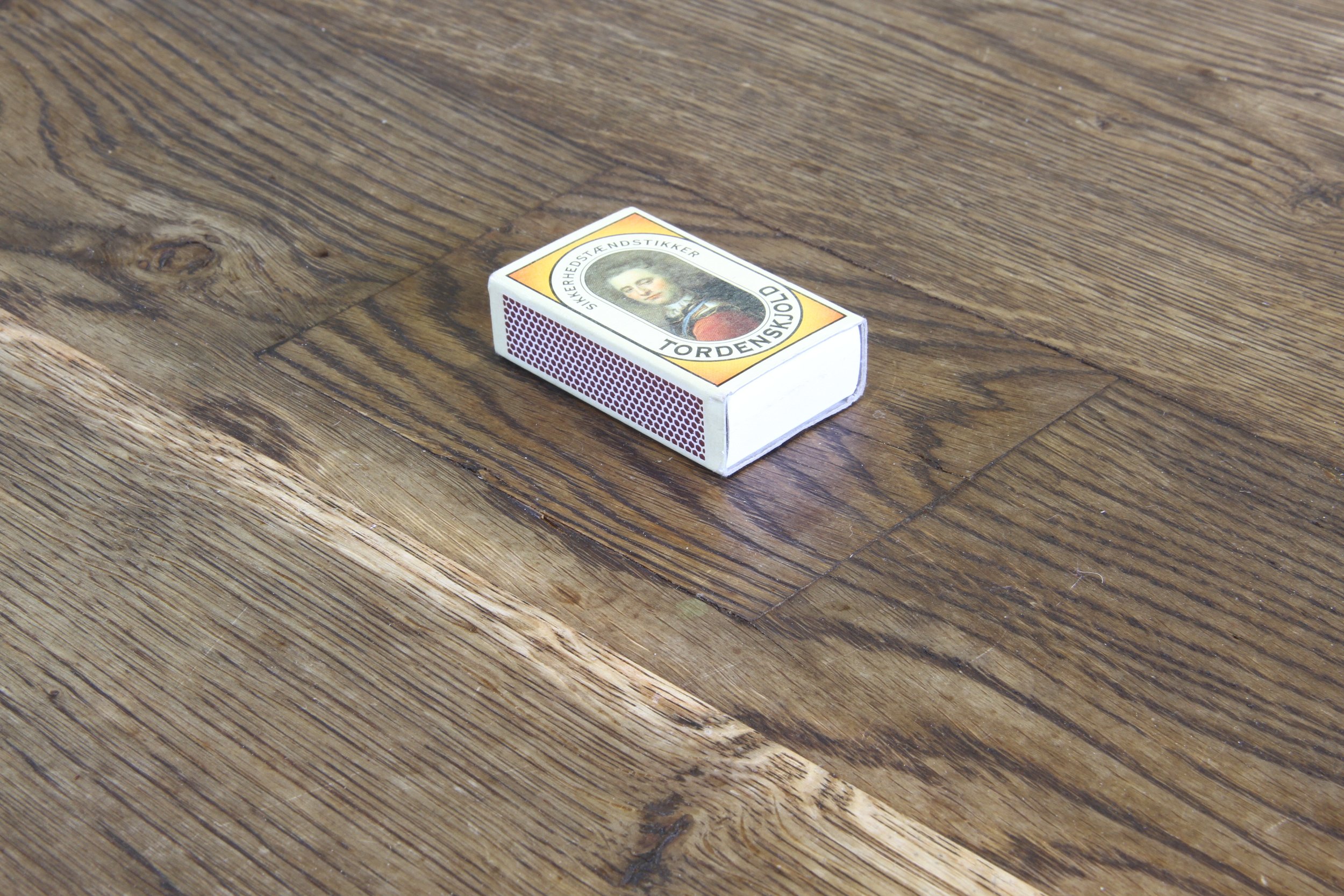 Image 11 of 15
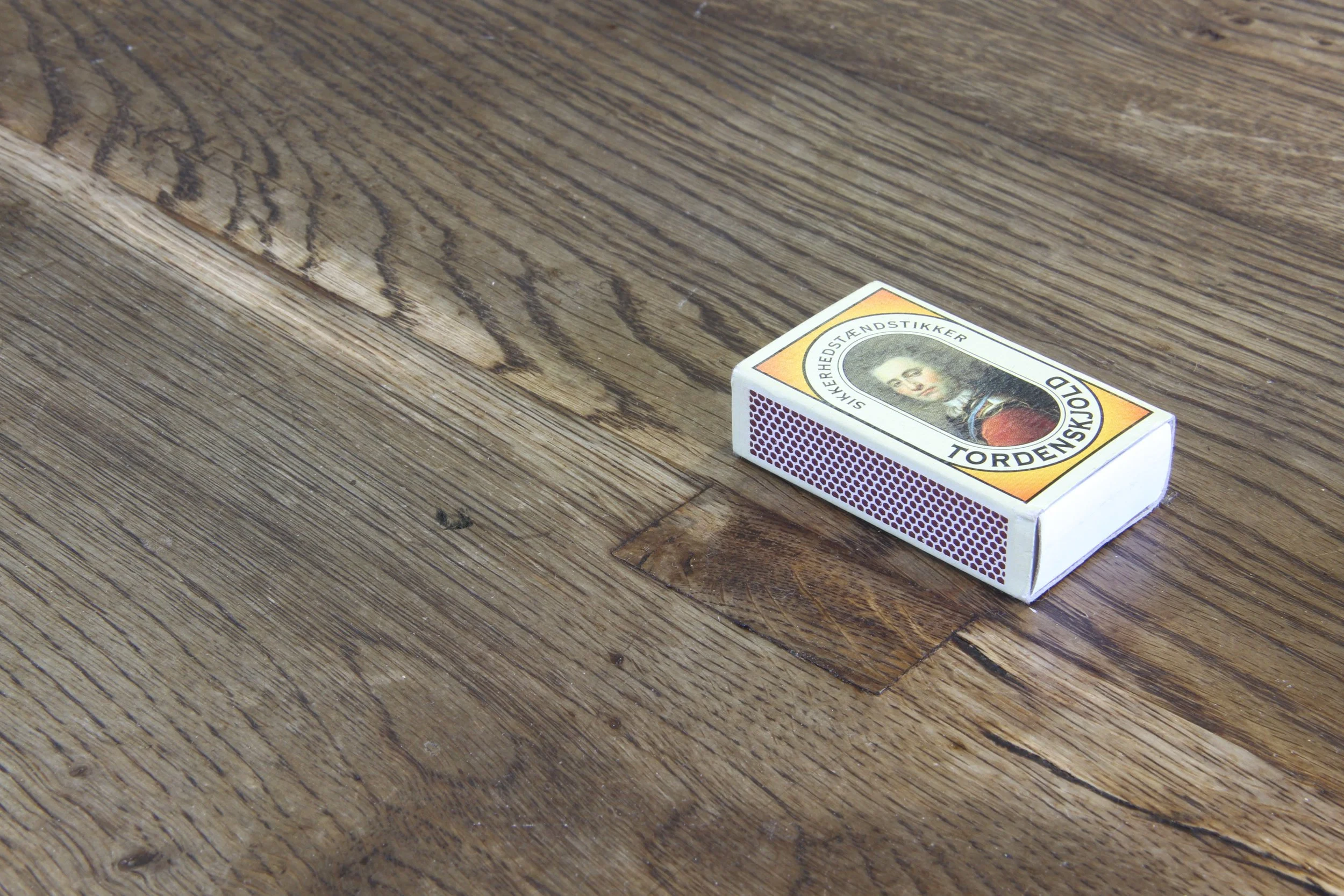 Image 12 of 15
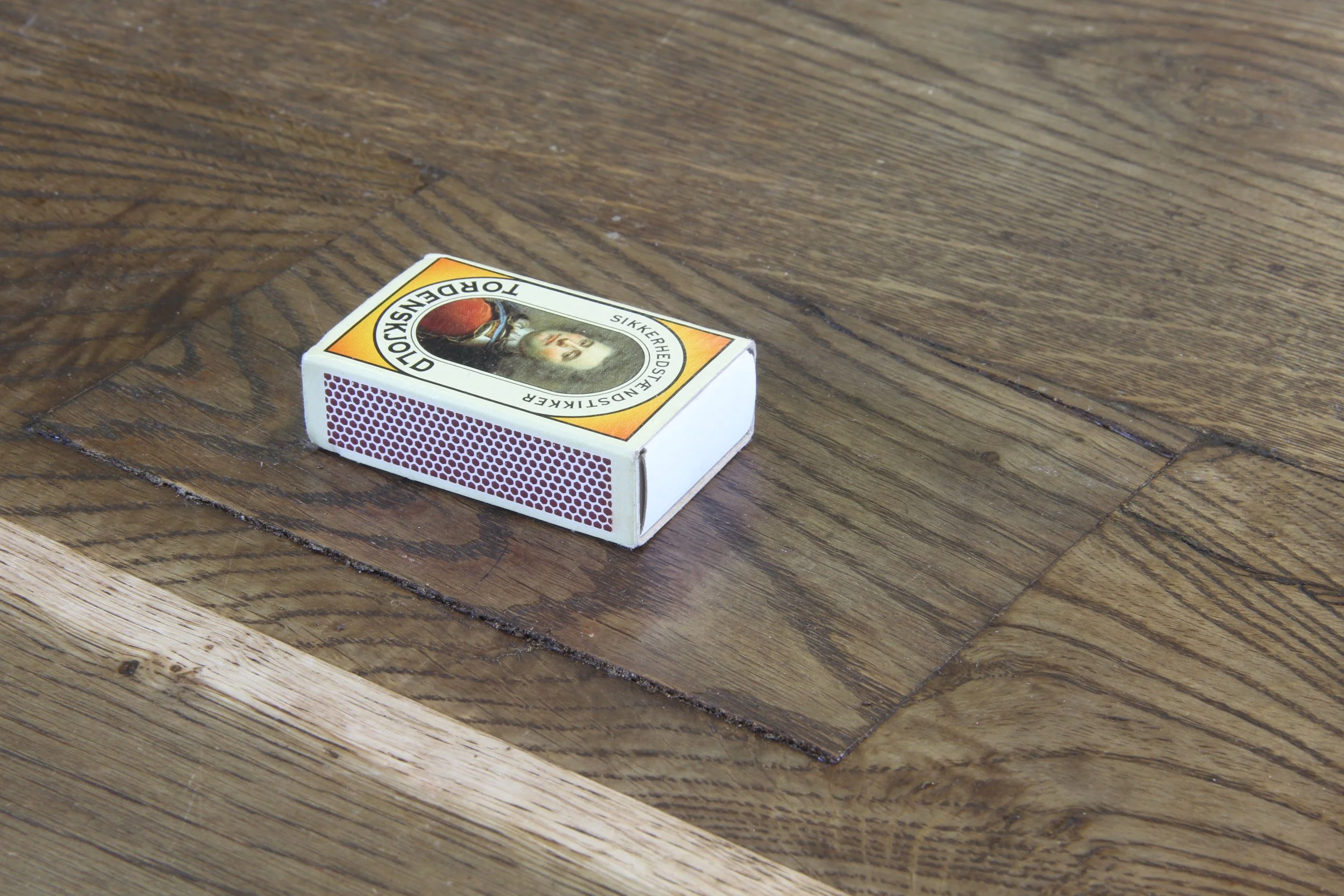 Image 13 of 15
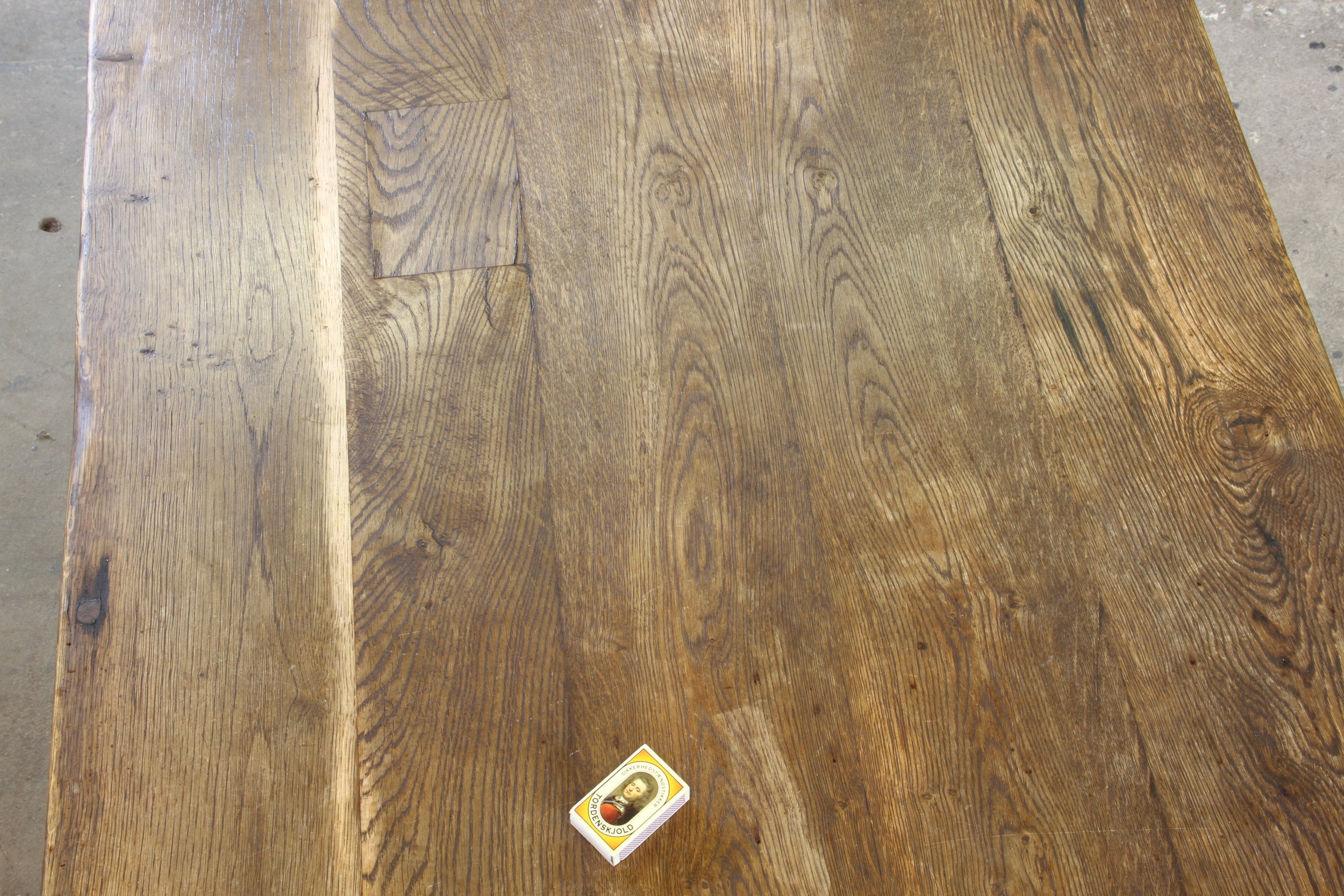 Image 14 of 15
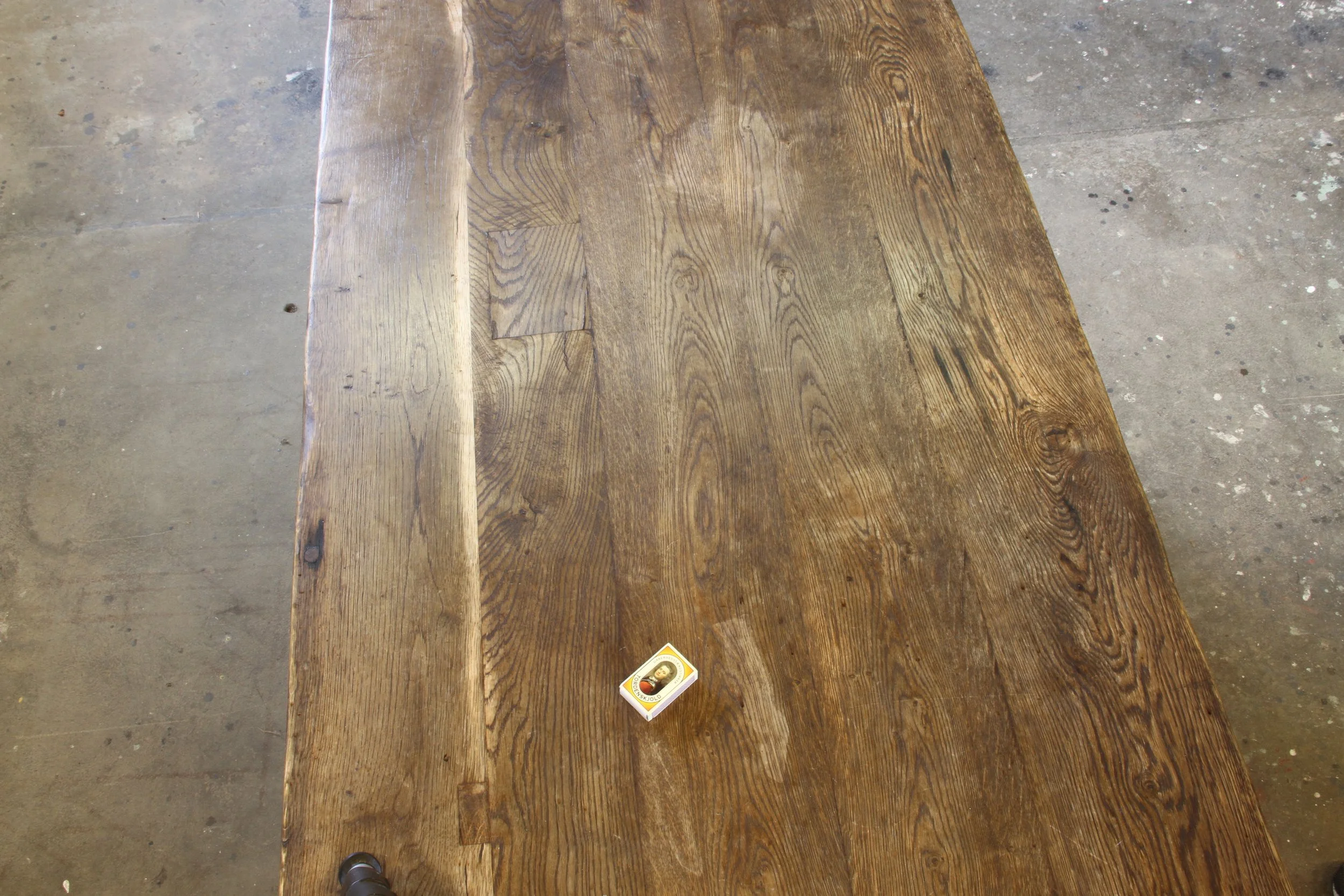 Image 15 of 15